
Genocide .live

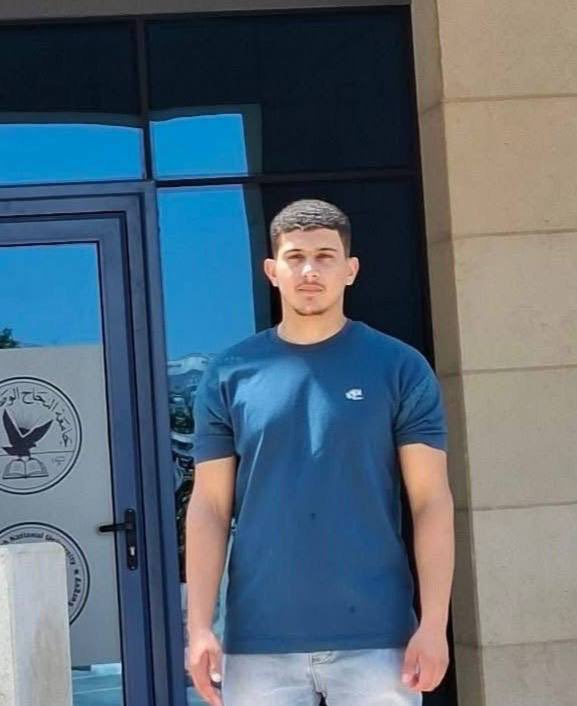
Assassination of Omar Muhammad Tubasi, 18, by settlers in Hajjah
West Bank, Qalqilya, Hajjah
06 Sep, 2026 - 07 Sep, 2026
At least 1 martyred
On September 7, overnight, a group of armed Israeli settlers entered in Hajja, east of Qalqilya in the occupied West Bank.entered/attacked the village.
Palestinian describes it as an armed settler attack, with settlers firing directly at residents, under Israeli army protection. Video from the attack captures settlers escalating the confrontation with Palestinian residents, including raising their weapon to take aim on unarmed Palestinians standing their ground.
The Palestinian Red Crescent said two Palestinians were shot, one in the head and another in the chest. The wounded were transferted at Darwish Nazzal Government Hospital.
18-year-old Palestinian Omar Muhammad Tubasi, a dentistry student at Najah University, was shot in the head and killed by armed Jewish settlers. According to Wafa, he later died at Darwish Nazzal Hospital in Qalqilya. The Palestinian Ministry of Health announced his martyrdom, adding that Omar is a second-year student at the Faculty of Medicine at An-Najah University, and a memorizer of the Holy Qur’an.
Two other Palestinians were wounded by live fire: one in the chest, reportedly seriously, and a 17-year-old in the thigh.
According to Israeli media Ynet, reported by The Times of Israel, settlers would have flown a drone over the village, residents threw stones at it, and the settlers entered to retrieve it; clashes then occurred between residents, settlers and Israeli soldiers. According to that account, IDF soldiers fired at Palestinians throwing stones. The IDF had not yet commented at the time of publication.
**Perpetrators:**
Just over a month ago, the violent settlement of Kedumim established an outpost—a so-called “farm”—called Sha’ar HaOz near the village of Hajjeh.

Summary execution of Khalil Abu Alia, 16, and Omar Mohammed Naasan, 19, by settlers and soldiers in Al-Mughayyir
West Bank, Ramallah, Al-Mughayyir
02 September, 2026
At least 2 martyred
On September 3, 2026, around 22:50, a group of settlers stormed the village of Al-Mughayir, northeast of Ramallah, and attempted to steal sheep from citizens’ homes.
At 22:55, Israeli forces almost immediately stormed the village of Al-Mughayir. They fired live and rubber-coated metal bullets, stun grenades, and tear gas at citizens while they were confronting the settlers, which led to the killing of two citizens, including a minor.
The Israeli settlers went near the Grand Mosque, attacked two Palestinian homes belonging to Saleh Suleiman and Shihada Kaabneh, and stole sheep.
Israeli army snipers took positions on buildings in the centre of the village. When residents confronted the settlers while they were taking the sheep, the snipers opened live fire.
Three Palestinians were reported wounded. One was shot in the neck and another in the back. Both were taken to hospital but subsequently died.
**The reported sequence was:**
1. Settlers entered the village with Israeli forces.
2. They went into the built-up centre near the mosque.
3. Two Palestinian houses were attacked/entered.
4. The settlers began taking Palestinian sheep.
5. Israeli snipers positioned themselves on rooftops/buildings overlooking the area.
6. Villagers came out to confront the settlers and prevent the seizure of the animals. Some, like Abu Alia, intervened to help their neigbours assaulted by the settlers when residents heard people inside one of the occupied houses screaming while being beaten. The witness said most villagers were outside confronting the army, while Khalil and Omar were in the vicinity of their homes.
7. Israeli forces opened live fire: Khalil Abu Alia, 16, was shot in the back, while Omar al-Naasan, 19, was shot in the chest, reportedly as he emerged from his home to help his neigborhood. Both died from their wounds.
**The Israeli military's version**
The IDF gives a markedly different account. It says troops entered the village to secure the entry of police and a civilian who was supposedly retrieving livestock belonging to Israeli civilians. According to the military, the animals were identified through distinguishing marks.
The army says a "violent riot" then developed, with Palestinians allegedly throwing stones and concrete blocks at troops. It says soldiers fired at "key instigators" and that hits were identified. The IDF says the circumstances and its handling of the incident are being investigated.
**Arrestation:**
The detainee in the village of Al-Mughayir is Omar Shehadeh Abu Alia.
**Names of the martyrs:**
1. Khalil Rasem Khalil Shehadeh, 16 years old
2. Omar Muhammad Naji Al-Naasan, 19 years old
**Statement of the Palestinian Ministry of Education and Higher Education:**
"The Ministry of Education and Higher Education condemns the killing of 16-year-old Khalil Rasem Abu Alia, a tenth-grade student at Al-Mughayyir School, and 19-year-old Omar Al-Nassan, a first-year student at Birzeit University, by Israeli settlers in Al-Mughayyir, Ramallah and Al-Bireh Governorate. The Ministry stresses that the crime is part of the ongoing escalation of attacks by Israeli settlers and occupation forces against Palestinians, particularly children, students, schools, and universities, and constitutes a flagrant violation of the right to life, security, and education."
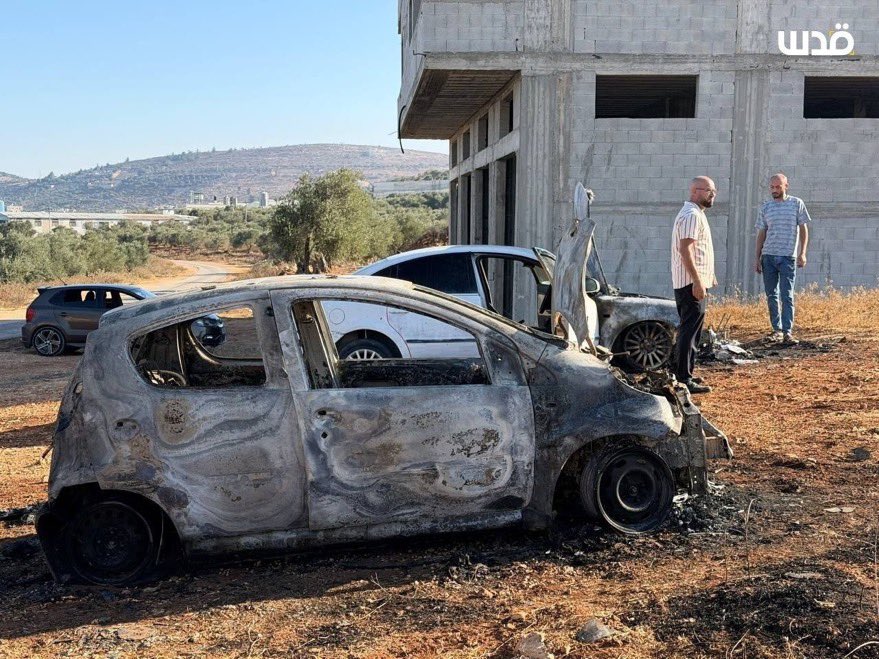
Overnight attack on vehicle in Beita
West Bank, Nablus, Beita
02 September, 2026
On September 2, 2026, around 2:50, a group of Israeli settlers attacked Palestinian property in Beita, south of Nablus in the occupied West Bank, setting fire to several Palestinian-owned vehicles
They entered the eastern outskirts of the town of Beita, and set fire to two vehicles belonging to the citizen Jabr Hamayel, parked in front of residents’ homes.
Security footage shows masked suspects dressed in black setting the two vehicles on fire before fleeing, and that Hebrew graffiti was sprayed on the walls of a house.
Despite this footage, no arrests was made.
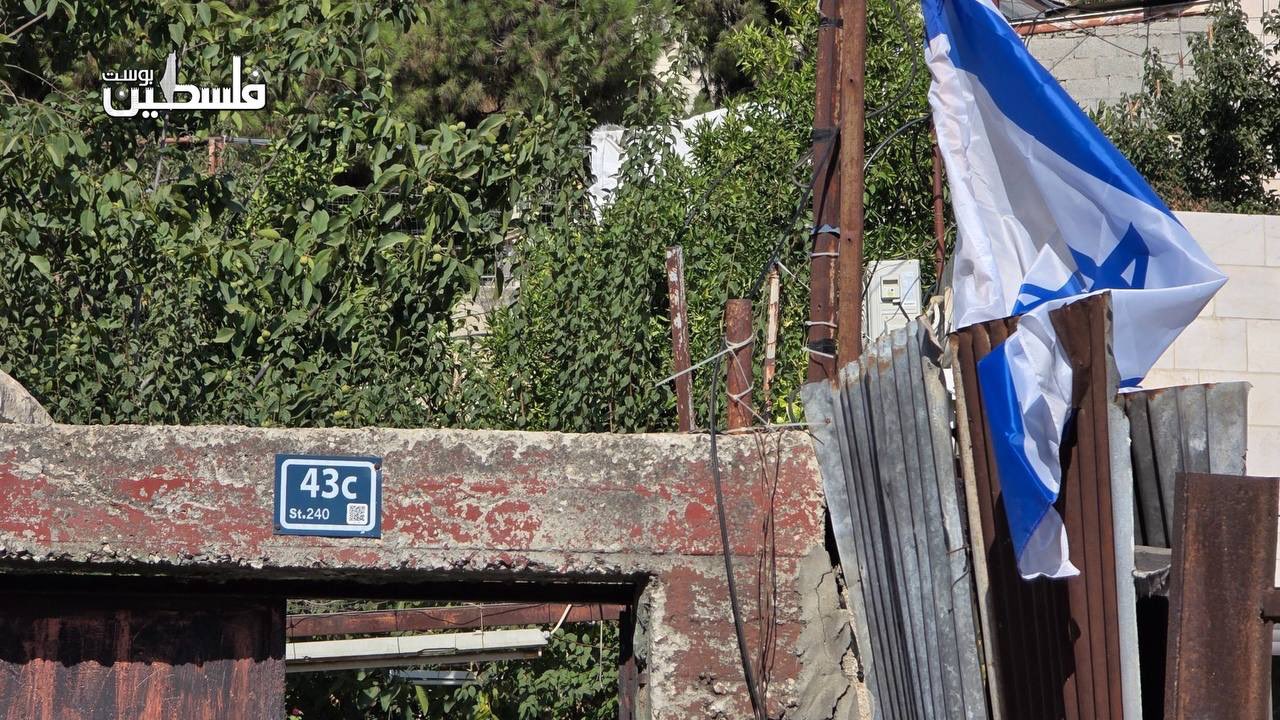
Land seized in Hebron (Old City) to establish an outpost
West Bank, Al-Khalil/Hebron
31 August, 2026
On August 31 to September 1 2026, in the Shalala (الشلالة / Shalala) area immediately adjacent to Hebron’s Old City, Israeli settlers moved into the Shalala Street area adjacent to the Old City, accompanied by Israeli forces, who established a security perimeter, in order to establish a new outpost in the heart of the city.
**On August 31, 2026 — Day 1:**
Israeli settlers arrived in the Shalala Street (شارع الشلالة) area, on the edge of Hebron’s Old City, accompanied and protected by Israeli forces. They brought an excavator and began clearing/leveling a plot of Palestinian land. Soldiers established a perimeter around the site.
A young Palestinian man was detained, handcuffed with a plastic zip tie, and forced to sit on the ground.
The two detainees in the city of Hebron are: Rajab Zigan and his son Omar.
Hebron Mayor Yousef al-Jaabari described the operation as an attempt to establish a new settlement outpost in the heart of the city. He said it was part of a broader plan to strengthen the settlers’ presence in the Old City.
**1 September 2026 — Day 2: the land-clearing continued**
The settlers brought their own machinery, forced their way into a carpentry workshop, broke its doors, and completely leveled the land next to it. Raef al-Harbawi’s family has rented the workshop for 70 years.
Israeli flags were placed on Palestinian properties and along the street. Another resident, Abu Mustafa al-Shyoukhi, said that settler provocations in the area had been continuing for more than six months, with the support of the Israeli army.
Badr al-Daour al-Tamimi, head of the Old City committee, said that settlers and the army brought bulldozers onto land they had seized by force, and considered the objective to be the establishment of an outpost that would further suffocate the area and push Palestinian residents to leave.
Resident Nidal al-Awiwi warned that the land seizure could effectively empty an entire street of its Palestinian residents, passers-by and visitors.
**Broader context:**
Hebron Mayor Yousef al-Jaabari warned that Israel aims to seize the Old City and Ibrahimi Mosque and transform its character from a mosque into a synagogue. Hebron’s H2 area, under direct Israeli military control since 1997, is home to around 40,000 Palestinians and nearly 200 settler families, living under separate movement and security regimes. The Ibrahimi Mosque itself is divided between Muslim and Jewish worshippers.
Bezalel Smotrich recently announced plans to transfer planning and construction powers at the site to Israeli authorities, while Israel’s Supreme Planning Committee subsequently approved a new building for the Shavei Hebron religious school near Beit Romano settlement. Al-Jaabari said Hebron is being targeted through settlement expansion, Judaization and property confiscation, while municipal officials are pursuing legal action despite their lack of confidence in Israeli courts.
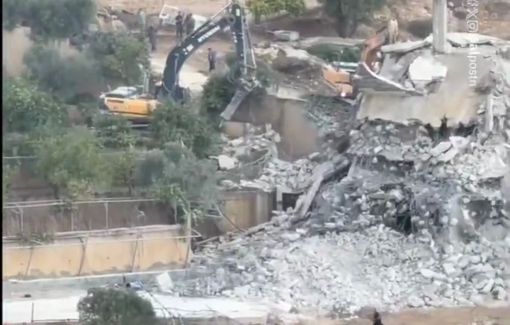
Demolition of houses in Birzeit
West Bank, Nablus, Birzeit
31 August, 2026
On Augustus 30, 2026, early in the morning, in the Ain al-Saqi area in the town of Birzeit, the Israeli forces demolished two residential buildings, each consisting of 4 floors and with an area of 250 square meters per floor, under the pretext of not having a permit. The owner is Karim Salama al-Nabali.
At 08:20, a group of settlers entered the northern outskirts of the town of Birzeit, beat and sprayed pepper gas on journalists while they were covering the press while the occupation forces demolished 2 houses.
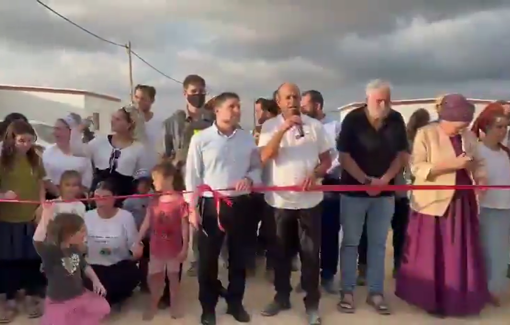
Official establishement of Makeda (Doran) settlement west of Hebron
West Bank, Al-Khalil/Hebron, Makeda (Doran) Settlement (היישוב מקדה (דורן)), Dura
31 August, 2026
On August 31, 2026, the first families arrived to establish Makeda (מקדה), also known as Doran (דורן), in the southern Hebron Hills / southern West Bank, near Adora, established on the lands of the town of Dura.
The site is located on the grounds of a former Israeli military post that was abandoned about 21 years ago. A first mobile structure had already been brought to the site in June 2026.
The sign displays the logos of the three Settlement Enterprises:
1. The Settlement Division of the WZO
2. Amana
3. Settler Regional Councils (here the Mt. Hebron Regional Council)
At the August 31 ceremony, at 22:50, Finance Minister Bezalel Smotrich, Settlement and National Missions Minister Orit Strock, and Har Hebron Regional Council head Eliram Azulai were present. Smotrich presented Makeda as part of a broader “security belt” intended to protect Kiryat Gat, Beit Shemesh, the Lachish settlements and the Shfela.
The Har Hebron Regional Council says the project was advanced with the assistance of Benjamin Netanyahu, Bezalel Smotrich, Defense Minister Israel Katz, Orit Strock, Amana, the Settlement Division and the Israeli military. The Har Hebron Regional Council explicitly describes Makeda/Doran as the beginning of a new settlement bloc in western Judea.The project is intended to create territorial continuity between existing settlements and the two newly established settlements: Eshkolot → Makeda/Doran → Karmi Yehuda → Telem / Adora.
Karmi Yehuda was also physically established in late August, with the first families arriving the previous week. However, it had already been approved earlier as part of the government's package of 34 new settlements announced in 2026.
According to the Har Hebron Regional Council, two additional settlements are expected to be established in the coming months/ Maagd (מגד) — south of Negohot and Ma'ale Anav (מעלה ענב) — north of Eshkolot, south of Beit Hagai. Both had already been included in the government's list of 34 new settlements.
Finance Minister Bezalel Smotrich said that *"as part of the settlement revolution we are leading, we fortify and strengthen the settlement, not with words but with actions. The ascent to the settlement of 'Mikda' is a historic and significant step for settlement. We are building the security strip of Kiryat Gat, Beit Shemesh and the settlements of Lachish and the lowlands. If, God forbid, a left-wing government led by Eisenkot-Lieberman-Golan emerges, they will evacuate the settlements and farms and establish a Palestinian terrorist state. This must not be allowed to happen. I thank the Settlement Directorate and Council President Eliram Azoulai for leading the settlement's rise to the ground".*
Settlement Minister Orit Struck added: *"We are in the midst of a huge national response process, in which the people of Israel are building their country again, with their state tools. The establishment of the settlement of Makda in Mount Hebron is another milestone in this vision, a vision that in difficult days some saw it as a distant dream, and today we get to see it grow skin and sinew. The power to fulfill this vision comes from the people of Israel, who chose life, the Land of Israel and settlement".*
**Timeline :**
1. December 11, 2025: Israeli Cabinet approves the re-establishment of Doran/Makeda,
2. December 21, 2025: Strock and Azulai participate in a ceremony at the Doran site,
3. June 16, 2026: First mobile structure brought to the site,
4. Late August 2026: First families arrive at Karmi Yehuda,
5. August 31, 2026 First families establish Makeda/Doran; ceremony attended by Smotrich, Strock and Azulai,
6. Coming months: Maagd and Ma'ale Anav expected to be established
According to Israel Hayom, *"The new settlement was established on an area where a military post that the IDF had abandoned over two decades ago was once located. He joins the settlement of Karmi Yehuda, where families entered last week. The move is intended to connect the settlement of Eshkolot in the south of Mount Hebron and the settlements of Telam and Adora."*
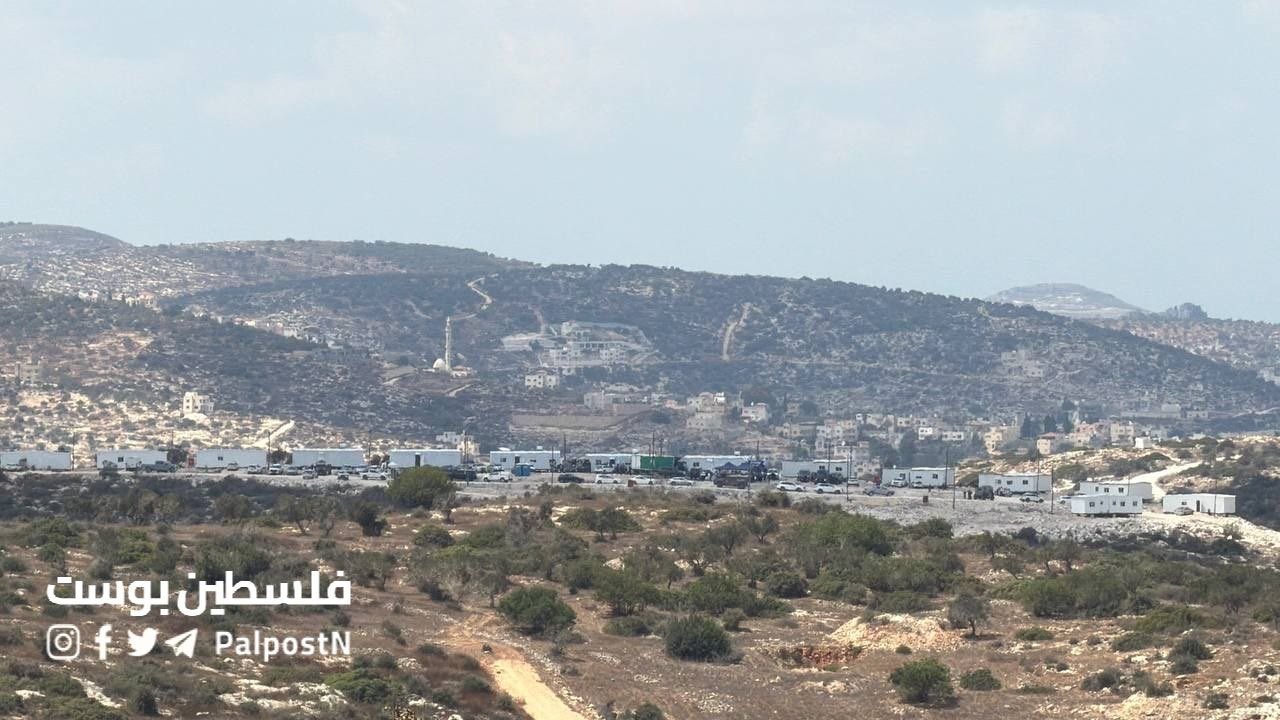
Official establishment of the "Noa" settlement near Jenin
West Bank, Jenin, Noa settlement (נועה)
31 August, 2026
Noa (נועה) is a new Israeli settlement in the northern West Bank, southeast of Jenin. On August 31? 2026, Israeli authorities formally established Noa south of Ganim and Kadim, on land southeast of Jenin. A ceremony was held with Israeli ministers, Yossi Dogan, and Knesset members.
Noa is one of the 34 new settlements approved by the Israeli cabinet on 25 March 2026 on land classified by Israel as state land.
Avi Blot, head of the Israeli army’s Central Command, signed 15 land seizure orders in Area A to pave a road linking the illegal settlements of Noa and Emek Dotan
On August 28, 2026, mobile homes were being installed at Noa and that bulldozers had been preparing infrastructure for more than a month.
On July 29, 2026, the Israeli Central Command commander, Avi Bluth, signed 15 land seizure orders to create a road connecting Noa and Emek Dotan.
On August 31, 2026, the first families had already settled there and that the first residential buildings were inaugurated on 31 August. It also connects Noa to the broader effort to re-establish Israeli settlements evacuated during the 2005 disengagement. Noa is now being physically established with roads, infrastructure, mobile homes and founding families. The connection to Emek Dotan is particularly important because the Israeli military has used land-seizure orders to facilitate the connection.
**Borader context:**
Thi is part of a broader plan to impose new settlement realities on the ground by establishing new settlement communities and expanding existing ones, threatening Palestinian agricultural land and the geographic contiguity between towns and cities in Jenin Governorate and its surrounding areas.
According to Dror Etkes: "“Seizure orders in Area A were previously used for military purposes, but now they serve a clear civilian and political goal: connecting settlements,” ... “The seizure orders amount to a deliberate destruction of the Oslo Accords by the Israeli army, acting under political directives,” Etkes said.
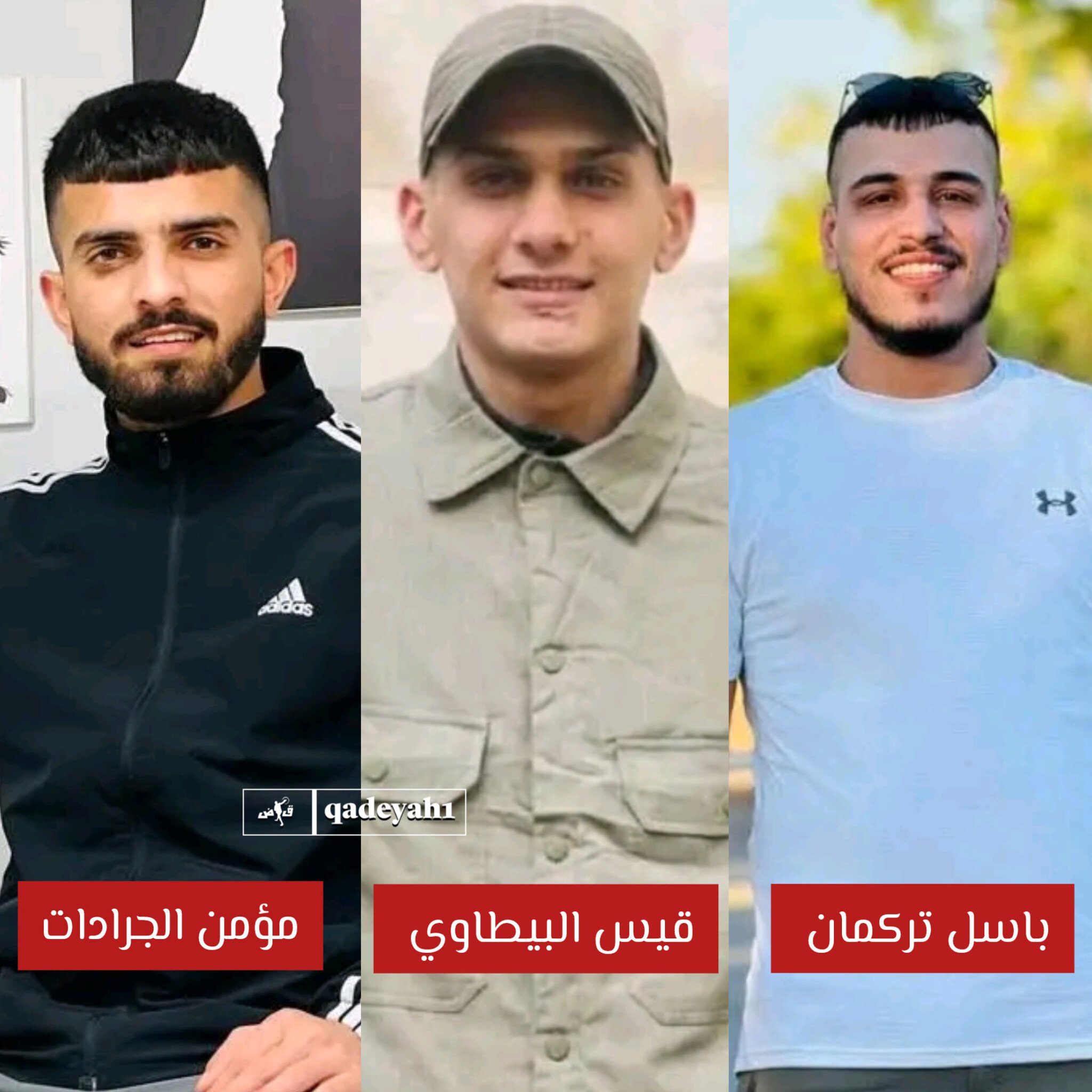
Three killed in a drone stike on a house in Horsh Al-Saada
West Bank, Jenin, Horsh Al-Saada
28 August, 2026
At least 3 martyred
On August 28, 2026, an Israeli military drone struck a house under construction in the Harsh Al-Saada on the western outskirts of Jenin in the occupied West Bank, as large numbers of Israeli forces entered the area. Three Palestinians were killed in the strike. Following the attack, additional military reinforcements were deployed at the scene and in several areas of Jenin city.
At 16:20, a drone bombed a house under construction in the Horsh al-Saada area in the city of Jenin, with the aim of assassination, leading to the martyrdom of 3 citizens, and their bodies were also detained.
It marked the first Israeli airstrike on the West Bank in around 10 months. Freshly released after months of administrative detention in Israeli jails, the Drop Site contributor Mujahed al-Saadi reported that the house was struck with at least two missiles and that Israeli troops deployed to the area immediately after the attack prevented ambulances from reaching the targeted house and detained Palestinian medical workers who arrived on the scene.
The Palestinian Red Crescent Society (PRCS) reported that its ambulance crews were called to the site of the drone strike, where Israeli forces detained them upon arrival. Later, soldiers released its crews, forcing them to leave without transporting any of the wounded or dead, and confiscated medical equipment. The PRCS wasn't allowed to transfer them to the hospital while Israeli forces had abducted the three bodies.
**Arrest:**
Israeli forces abducted the young man Ibrahim Al-Bitawi while he was near the Al-Naseem roundabout in Jenin city.
The father and the mother of Qais Ibrahim Mohammad Al-Bitawi were then separately abducted by the Israeli forces in the same village.
Another detainee in the city of Jenin was Anas Al-Norsi.
**Names of the martyrs:**
1. Qays Ibrahim Mohammad Al-Bitawi, 22,
2. Basil Mohammad Ibrahim Turkman, 26,
3. Momin Mohammad Faris Jaradat, 22,
**The Israeli military statement:**
The IDF published the aerial footage of the drone strike. It claimed it had carried out a “precise strike” targeting what it described as “several terrorists.” They announced the assassination of the wanted Qais al-Bitawi, along with “additional aides,” after carrying out what it called a “precision attack” in Jenin. The army claimed that Al-Bitawi was an “organization leader” who was allegedly “responsible for local Hamas activity in the Jenin camp,” who “worked to advance numerous operations,” adding that a weapon was found in their vehicle.
However, the Islamic resistance movement (Hamas) did not claim Al-Bitawi as a member of its forces, while the Islamic Jihad resistance group released a statement that he was a senior operative of its armed wing.
**Israeli political figures’ endorsement:**
Israeli Prime Minister Benjamin Netanyahu praised the strike on X: “I commend our forces for the successful elimination of the terrorists in Jenin. Shabbat shalom!” Israeli Prime Minister Benjamin Netanyahu described it also as “an initiative, an attack, and a successful thwarting.”
Yisrael Katz, Israel’s Defense Minister, stated that “These are the fruits of the offensive and preemptive policy that we are leading in ‘Judea and Samaria’ (the occupied West Bank),” adding, “We will continue to act forcefully and preemptively and thwart any threat to Israeli citizens, wherever it may be.”
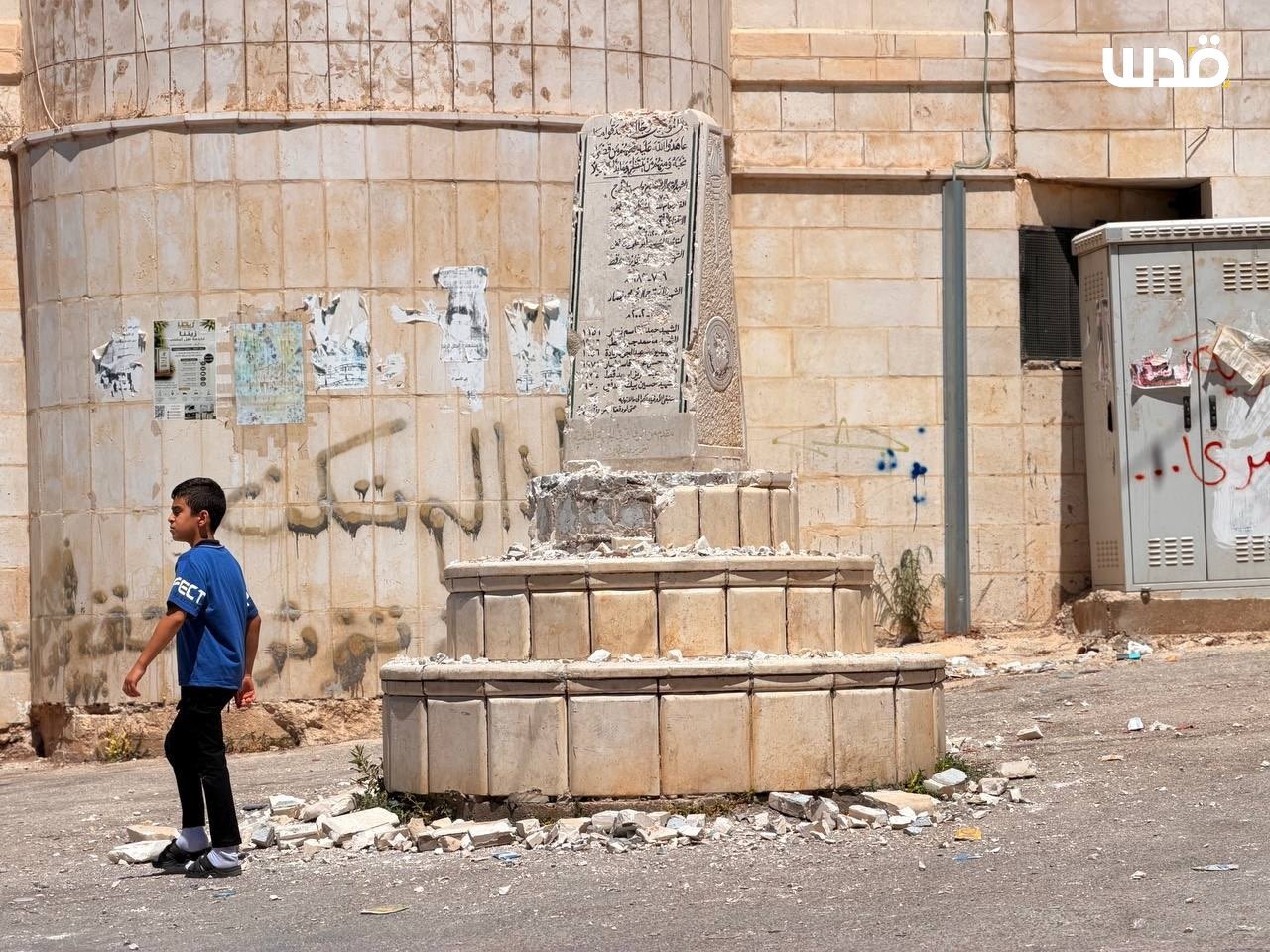
Zvi Sukkot “memorial tour” of Palestinian villages
West Bank, Nablus, Madama
25 August, 2026
On 25 August 2026, Israeli MK Zvi Sukkot of the Religious Zionist Party entered Madama (مادما), south of Nablus, accompanied by several Israelis and protected by IDF and Border Police forces. He had organized what he called a “memorial tour” of Palestinian villages, including Beita, Burin and Madama, in Areas A and B.
The immediate background goes back to 16 August. After the settler-oriented outlet HaKol HaYehudi reported the existence of Palestinian memorials that it described as commemorating militants, Sukkot went to the entrance of Madama and demanded that the army remove them. He said that if they were not removed, he would act himself.
The army apparently did not agree to let him demolish them. According to the IDF, Sukkot had formally requested security for his “memorial tour,” but demolition was not part of the approved plan. The IDF says it even recommended postponing the tour because of the security situation and offered instead to document/map the monuments for him. Sukkot nevertheless insisted on going. Then he did exactly what he had threatened to do: Video shows Sukkot holding a hammer/sledgehammer and striking the monument. Another person accompanying him also strikes it while Sukkot films. Israeli military vehicles and soldiers are visible protecting the group. Sukkot himself confirmed the action. His explanation was essentially: “I demanded that the army act to remove the monuments … but unfortunately they remained in place. Therefore, I came myself and acted to remove them.” He described them as monuments commemorating “terrorists” and argued that Palestinians were presenting people who had attacked Israelis and soldiers as heroes to the next generation.
The Madama monument appears to commemorate Palestinians killed during the conflict/intifada, including members of the al-Aqsa Martyrs' Brigades. Israeli reporting specifically identifies names including Yamen Tayeb Ali Faraj and Shadi Nassar. Israeli sources say Faraj was involved in an attack in which an Israeli was killed and subsequently exchanged fire with Israeli forces; another person commemorated on the monument, Nassar, was killed after carrying out a suicide bombing near Ariel in 2002.
So there is a substantive dispute over what the monument commemorated: Sukkot calls it a “terror monument”; Palestinian/foreign reporting generally describes it as a Palestinian memorial.
Sukkot deliberately went to a Palestinian village with the stated intention of removing a monument after the army declined to do it.
He used an IDF-protected visit to carry out the destruction himself, apparently outside the authorization given for the visit.
That's why the IDF is accusing him not merely of vandalism, but of exploiting military protection to exceed the agreed mandate.
**The IDF issued an unusually strong condemnation of Sukkot:**
It says the group: “acted deceptively and manipulatively, without authority and in complete violation of the approved framework” and began destroying the monument without authorization. Once soldiers realized what was happening, they contacted their commanders and were ordered to stop the destruction and remove Sukkot and the others from the village.
The army also says that operational troops were diverted from their normal missions to provide security for Sukkot, and that this exposed them to unnecessary risk.
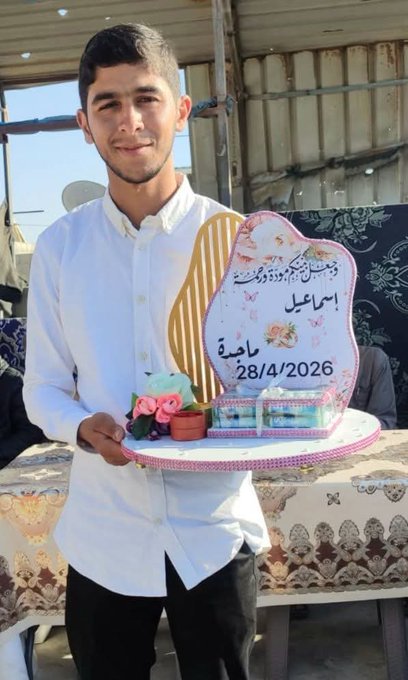
Young groom killed in Al-Maghazi
Gaza, Deir al-Balah, Al-Maghazi
23 August, 2026
At least 1 martyred
An early morning Israeli airstrike killed a young man and injured at least two other people near the northern entrance to Al-Maghazi refugee camp in central Gaza.
The young man was due to be wed in September.
**Name of the martyr:**
1. Ismail Abu Foul (25 y/o)