
Databases for Palestine logo

Weekly protest in Tulkarm for the return in Nur Shams camp

West Bank, Tulkarm, Nur Shams 11 October, 2025
Since November 2025, the residents and displaced families during the Iron Wall operation in February 2025 protest against ongoing military operations, destruction, and restrictions preventing their return to Nur Shams refugee camp . More than 10,500 people displaced from Nur Shams camp by mid-May 2025, representing approximately 78 % of the camp’s registered residents (13,519 people total). More than 12,200 people displaced from Tulkarm camp by mid-May 2025. hrvoices.org Approximately 22,700+ individuals displaced between the two camps. ### **Timeline of the protests:** **On October 11**, displaced Palestinian residents from Tulkarm and Nur Shams camps held a protest in front of the UNRWA headquarters, urging the agency to fulfill its responsibilities and calling on officials to take action to ensure they can return to their homes. **On Wednesday, November 12, 2025**, residents of Nur Shams refugee camp held a rally calling for their return to homes from which they were displaced over months by Israeli military operations. Dozens, including women and children, participated with banners asserting that displacement is a crime and return is a right. This protest toke place near the Israeli military outpost at Nur Shams entrance, east of Tulkarm (West Bank). **On November 23**, Israeli forces detain foreign activists who participated in a protest with local residents demanding the right to return to their homes in Nur Shams camp. **On December 15, 2025**, Israeli occupation forces prevented a planned protest by Nur Shams camp residents against a military order to demolish 25 residential buildings inside the camp. Forces blocked the rally and continued demolition and incursion operations in and around Tulkarm and the refugee camps. This protest toke place at the entrance of the Nur Shams camp, east of Tulkarm.

Assassination of Muhammad Salama

West Bank, Jenin, Cinema Roundabout 10 October, 2025
At least 1 martyred
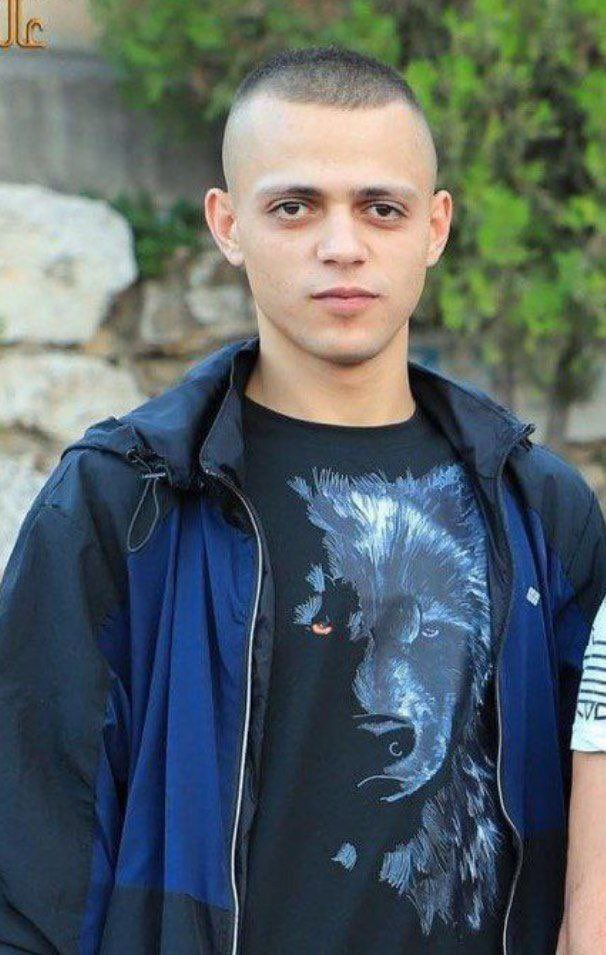
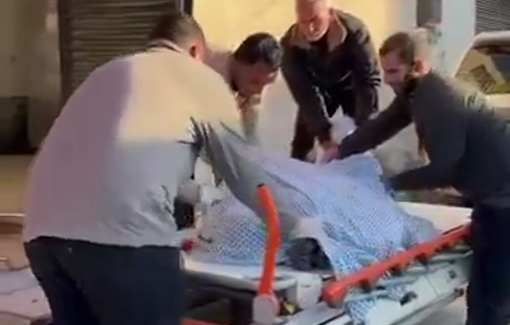
On October 10, 2025, during confrontations with Israeli soldiers raiding the town of Jenin, 25-year-old Muhammad Adnan Youssef Salameh was killed after being hit by live bullets in the abdomen and neck near the Cinema Roundabout in the center of the city. The incident occurred as Israeli forces carried out a large-scale raid on several neighborhoods, opening fire toward residents and triggering armed clashes with local fighters. According to researcher Chris Ozieck, geolocation analysis indicates that an Israeli sniper positioned near the Cinema Roundabout in Jenin (coordinates 32.461758, 35.296580) fired the shots that struck Salameh. The Palestine Red Crescent Society (PRCS) confirmed that its medical teams transferred the victim’s body after he succumbed to his wounds. The Palestinian Ministry of Health later identified him as Muhammad Adnan Youssef Salameh, aged 25. In the same incident, WAFA News Agency reported that “a 15-year-old child was also injured by live-bullet shrapnel in his lower extremities near the Cinema Roundabout and was transferred to hospital by Red Crescent crews.” With the killing of Salameh, the number of Palestinians killed in the Jenin Governorate rose to 50 since the beginning of the Israeli military campaign on January 21, 2025 **Name of the martyr:** Muhammad Adnan Youssef Salama

Pogrom in Beita at the start of the olive harvest

West Bank, Nablus, Beita 10 October, 2025
These acts of violence against Palestinians during the olive harvest are not new, but their scale and intensity have never been as great as in the past two years. These attacks serve a twofold purpose: first, to spread terror among the population, but also—and above all—to deprive the Palestinian people of one of their only sources of livelihood: the production, sale, and consumption of olive oil. **On October 10, in Beita, Nablus Governorate:** Shortly after midday, two groups of Israeli settlers armed with sticks and stones -- numbering around 70 people in total -- attacked the olive pickers and journalists at the scene in the village of Beita. Israeli troops, who were escorting the settlers during the attack, fired tear gas grenades and stun bombs at the Palestinian farmers; Dozens of settlers, armed with iron bars, brutally beat farmers as well as journalists and international solidarity activists. The army, which followed them, used stun grenades and tear gas, which resulted in additional injuries due to suffocation. Journalists were also among the injured. **Wounded :** 1. According to the Palestinian Health Ministry, 36 people were injured in Beita and nearby villages during the day’s settler attacks, with most of them suffering minor or moderate injuries, with the exception of two who were wounded by gunfire. 2. Journalist Wahaj Bani Moufleh was directly hit by one of these projectiles. 3. The AFP Photographer, Jaafar Ashtiyeh, a veteran Palestinian journalist, was hit by stones on his back, arm, and hand and later treated for bruises. His car was set on fire, along with others parked nearby. He reported that Israeli soldiers present at the scene did not intervene to stop the settlers but instead fired tear gas and rubber bullets at Palestinian farmers and activists to disperse them. **AFP statement :** AFP’s Global Editor-in-Chief Mehdi Lebouachera condemned the “outrageous attack” and called on the Israeli army to protect journalists and ensure that the attackers are prosecuted. **On October 10, in Kafr Ni'ma, west of Ramallah** After the settlers’ attack, Israeli occupation forces arrested six young men after raiding the area where they were harvesting olives in the village of Kafr Ni'ma, west of Ramallah. **Testimony by @Ireallyhateyou on X** "During the settler pogrom last Friday, in the olive orchards of Beita in the West Bank, a friend of mine, a Jewish solidarity activist, got separated from the locals and the other activists and was cornered by masked settlers who were throwing rocks at her. She fell, broke her hand, and couldn't get up, while the settlers continued to stone her. Meanwhile, the Israeli soldiers were firing live rounds to disperse the Palestinians and the rest of the activists. Luckily for her (if you can call it "luck"), one of the pogromists felt sorry for her when he realized she was Jewish and stopped his friends from continuing the attempted lynch." **Testimony of International Solidarity Movement:** *"On October 10, in the hills above Beita, what should have been a joyous start to olive harvesting season illustrated what our Palestinian comrades face as they try to work their land. We arrived to ambulances and three injured Palestinians, attacked by settlers before 8am. Within the first hour, we encountered a group of seven settlers. There was shouting, aggressive posturing and immediate confrontation with the Israeli Occupation Forces. The army fired tear gas canisters at us, and a journalist was injured. Then we were able to negotiate to continue the harvest, and for two and half hours, we enjoyed relative calm until the settlers returned in larger numbers. We started to hear the screams of the Shabab, pointing at a confrontation on a nearby hill. We saw the first car out of eight lit on fire by the settlers, and then sound of live ammunition sent us looking for shelter. A crowd of Palestinians started to move around the hills, while others directed us to safe places as they extinguished the fire. The settlers attacked the Palestinians from the hill behind, leading to the hospitalization of 11 Palestinians and one international volunteer, as well as the setting ablaze of eight cars, and a failed attempt at lighting the ambulance too. This all happened in a well-known place of resistance, where just last year, one of our volunteers– Ayşenur Ezgi Eygi– was martyred while taking shelter in this olive grove. Despite the injuries and violence, farmers we spoke to in Beita saw the day as a success. They still managed to collectively go to the villages’ land and harvest some olives. In many other locations, the harassment and violence of army-supported settlers have kept Palestinians from accessing their land at all. Palestinians pay a heavy price for resisting on a daily basis, but the people of Beita refused to back down, in spite of the odds. The steadfast spirit of resistance is strong. We are not defeated."* **Testimony of photojournalist Jaafar Ashtiyeh:** On October 10, photojournalist Jaafar Ashtiyeh went to document a joint olive harvest between Israeli peace activists and Palestinian farmers in Beita, coordinated with the army. *“Things were quiet when he arrived,” *and soldiers had ordered the group *“not to cross a certain line.”* Suddenly,* “dozens of masked settlers descended upon the harvesters and attacked them with clubs and stones.”* A Palestinian Jeep was torched, and Ashtiyeh’s own car was also destroyed. As he fled, *“they pelted him with stones,”* and he was injured. Unable to reach his vehicle, he watched helplessly as *“my car [was] going up in flames.”* He described it as *“one of the worst moments ever: You see how your property is being destroyed and you are helpless to do anything about it.”* Ashtiyeh lost cameras and equipment in the fire but survived. Despite the injuries, he continues his work: *“I’m trying to avoid the dangers now, but I’ll go back to them. They are my life.”* ![](https://d5rksbrpzzwjw7.archive.fo/v6IOJ/616fe1ab3fa52b609c77f5ce4abe67023b197917.webp) *An Israeli throws a stone at olive pickers in the village of Beita as soldiers stand behind him last month. "I'm trying to avoid the dangers now, but I'll go back to them," Ashtiyeh says. "They are my life." Credit: Jaafar Ashtiyeh / AFP*

Kafr Qaddum under attack and land theft

West Bank, Qalqilya, Kafr Qaddum 05 October, 2025
In October 2025, the Palestinian village of Kafr Qaddum, located in the northern West Bank near Qalqilya, has experienced intensified Israeli military actions and settler violence. **1. Settlement Expansion:** Israeli authorities approved a plan to seize 35 dunams (approximately 9 acres) of land from Kafr Qaddum for the construction of 58 new housing units at the recently legalised Mitzpe Yeshai settlement, situated on the land of Palestinian village Kafr Qaddum, beside the Israeli settlement town of Kedumim where Israeli Minister Smotrich lives, west of Nablus. **2. Attacks on Farmers:** Farmers in Kafr Qaddum have faced attacks from both Israeli forces and settlers during the olive harvest. These assaults have disrupted agricultural activities and posed threats to the livelihoods of local farmers. According to the head of the Wall and Settlement Resistance Commission, Mu'ayyad Shaaban, "Yesterday we were in Kafr Qaddum, and today we are in al-Nazla al-Sharqiya. All areas are subjected to oppression by the occupation and its colonists. Despite this, the Palestinian farmer insists on reaching his land, which is a source of pride and honor for our people, who rise up as one to protect their land and olives." **3. Military Incursions and Arrests:** Israeli forces have conducted extensive raids in Kafr Qaddum, including the storming of homes and the imposition of curfews. Notably, on October 16, they arrested Murad Shteiwi, the director of the Colonization and Wall Resistance Commission, and detained two brothers from the village **4. Ongoing Protests:** Despite the challenges, residents have resumed their weekly demonstrations against Israeli occupation and settlement expansion. On October 15, over 100 people participated in a march to the olive groves, signaling a revival of the village's longstanding resistance activities The continuous military presence and settler violence have severely affected daily life in Kafr Qaddum. Local businesses, health facilities, and schools have been forced to close due to security concerns, and residents live under constant fear and disruption.

3 people killed in Al-Zawayda

Zawayda, Deir al-Balah, Gaza 02 October, 2025
At least 3 martyred
Around 3:40 pm, an Israeli strike targeted a group of people in the vicinity of Al-Zawayda clinic, killing 3 people.

Al-Nabaheen brothers killed while collecting firewood

Gaza, Deir al-Balah, Bureij 02 October, 2025
A morning Israeli strike killed four siblings from Al-Nabahin family while they were gathering firewood in the Bureij camp. **Names of the martyrs:** 1. Nidal Musa Al-Nabaheen 2. Muhammad Musa Al-Nabaheen 3. Anwar Musa Al-Nabaheen 4. Akram Musa Al-Nabaheen

Massacre at the Shurrab family charity kitchen

Gaza, Khan Younis, Al-Mawasi 02 October, 2025
At least 10 martyred
A midday airstrike targeted a charity kitchen organized by the Shurrab family in western Khan Younis. 10 people were killed most from the Shurrab family: the father, his four sons, and his grandson. **Names of the martyrs:** 1. Jomaa Is'haq Shurrab (father) 2. Osama Jomaa Is'haq Shurrab (son) 3. Muhammad Jomaa Is'haq Shurrab (son) 4. Mahmoud Jomaa Is'haq Shurrab (son) 5. Ahmad Jomaa Is'haq Shurrab (son) 6. Jomaa Salem Shurrab (grandson, son of nurse Salem Shurrab killed in 2024) 7. Ahmad Diyab Al-Aqqad 8. Zakariya Yousef Shabeer 9. Izzeddin Nabil Badir 10. Ibrahim Adil Al-Khatib

Massacre at the Ghabboun family house

Gaza, Gaza City, Al-Shati 01 October, 2025
At least 7 martyred
Around 2 pm, an Israeli airstrike targeted the house of the Ghabboun family on Aydiya Street in Al-Shati camp, western Gaza City. At least 6 people were killed. **Names of the martyrs:** 1. Moeen Ghabboun 2. Hamza Muhammad Ghabboun 3. Joudi Muhammad Ghabboun 4. Manal Al-Laqta 5. Dunya Jamil Al-Laqta 6. Mukarram Jamil Al-Laqta 7. Said Al-Laqta (8 months fetus)

Israeli strike on press tent at Al-Aqsa Martyrs Hospital

Gaza, Deir al-Balah, Al-Aqsa Martyrs Hospital 01 October, 2025
At least 1 martyred
Around 2:50 pm, an Israeli airstrike targeted a journalists' tent at Al-Aqsa Martyrs hospital in Deir al-Balah. One person succumbed to his wounds shortly after, whereas journalist Fadi Thabet was reportedly injured. This was the 15th Israeli direct attack on the premises of the hospital during the genocide. **Name of the martyr:** - Ahmad Fattouh (37 y/o)

Olive harvest 2025 under attack (West Bank)

West Bank 01 October, 2025
At least 1 martyred
The olive harvest is culturally, economically, and socially vital for many Palestinian communities. However, the 2025 season is expected to be subject to heightened risks. These stem from a combination of settler violence, restrictions on land access, environmental factors (including pests and climate change), and governance/policy issues. **Palestinian farmers experience frequent attacks during harvest time:** vandalism of trees, burning or cutting down of trees, theft of crops, and intimidation. In many incidents, Israeli settlers are accompanied by Israeli occupation forces or benefit from insufficient protection by authorities. Some communities are identified as "hotspots" where violence or harassment recurs annually—especially villages near settlements, bypass roads, or in areas with settlement outposts. Certain governorates are likely to be more affected: Nablus, Ramallah, Hebron, Salfit, Qalqilya, and Tulkarem among them, especially for communities close to settlements or outposts. **Restrictions on Land Access:** Many farmers are being denied or delayed access to their olive groves, especially where lands are near or behind settlements, barriers, or within Area C. Checkpoints, gates, and the requirement for permits (“prior coordination”) often limit access; in some cases entire orchards are inaccessible during the harvest. These restrictions negatively affect not only harvesting but all preparatory agricultural activities (pruning, fertilizing, pest control). Reduced maintenance further diminishes productivity. **Economic & Livelihood Impacts:** Loss of harvest due to the above risks translates directly into financial harm: lost olive oil production, loss of trees (which are long‐term assets), missed market revenues. Many families rely heavily on olives and olive oil as a primary source of income; disruptions in harvest can undermine food security, household income, and cultural practices. The combination of environmental stressors (pests, climate) on top of security and access issues may lead to significantly lower yields in affected areas, potentially large economic losses and deeper food security challenges for vulnerable households. **Policy, Legal, and Institutional Risks:** Permitting systems, zoning, rules about coordination for land access are sometimes arbitrary or revoked, making future planning difficult. These attacks or property damage often go without accountability. ## Timeline of the main events (Ongoing) **On October 10,** a large-scale pogrom was carried out by 70 settlers and backed by Israeli soldiers, firing tear gas, stun grenade, and even live amnunition during the olive harvest in Beita, near Nablus. More than 12 Palestinian farmers and activist were wounded. The set fire at 8 cars including the vehcle of the AFP journalist. Another Palestinian journalist were injured. **On October 16**, Settlers, under the protection of the occupation forces, assault citizens, including the head of the Wall and Settlement Resistance Commission, Muayyad Shaaban, while they were participating in the Olive Harvest Campaign 2025 in the village of Kafr Qaddum, east of Qalqilya. **On October 17**, Israeli settlers attacked olive pickers in the towns of Aqraba, south of Nablus, and Farkha, south of Salfit in the occupied West Bank. A farmer had been picking olives with his wife and son when he was attacked and severely beaten by settlers. The farmer was later transferred to Salfit Governmental Hospital for treatment. According to Mustafa Hammad, head of the Farkha village council, the settlers had forced the farmer’s family off their land last week and returned this week. At the same time, in *Aqraba*, settlers targeted farmers looking after their olive fields and forced them off their lands, second time since last week; Settlers targeted also farmers looking after their olive fields and forced them off their land. In *Silwad, Qabalan, Qusra, Ramin, Salem* and the *Beta* area, settlers attacked Palestinians who were engaged in the harvest and prevented it. In Qusra, the settlers also opened fire on the harvesters. At the harvest in *Silwad*, for example, which was held by Palestinian olive grove owners in cooperation with rabbinical human rights activists, instead of preventing the settlers from attacking, the army issued a closed military zone order, thereby effectively cooperating with the violence. The settlers also prevented rescue forces from entering the area, blocked an ambulance, and prevented the wounded from receiving medical treatment on the spot, while threatening that an "event" would occur if the ambulance reached the wounded. **On October 18**, in *Kobar*, north of Ramallah, Israeli forces opened fire and launched stun and tear gas grenades at Palestinian farmers and journalists as they tried to access their land for the olive harvest. Soldiers fired at them, forcing them to retreat. No injuries were reported. “The (Israeli) occupation army prevented farmers from reaching their lands west of the village, particularly in the Qanater and Daak areas, and opened fire at them without causing injuries,” farmer Fahd Abu al-Hajj told Anadolu. **On October 19,** in *Turmus Ayya*, a violent pogrom was carried out by settlers backed by soldiers, trapping all the farmers and solidarity activists in the plain between two occupied hills. Dozens of violent settlers, armed with batons, rocks, and guns, assaulted several people, including two Palestinian women and foreign activists. A 52-year-old woman was severely injured in the head. Jasper Nathaniel, a U.S. journalist and activist, was chased by dozens of settlers attempting to kill him. **On October 22**, Palestinian Ministry of Agriculture in Jerusalem states that"Israeli settler gangs have uprooted over 200 fruitful olive trees belonging to Palestinian farmers, aged over 30 years, in the town of Mukhmas, northeast of Jerusalem." **Report of the first week:** The United Nations Office for the Coordination of Humanitarian Affairs (OCHA) reported that settlers carried out 35 attacks targeting the olive harvest, affecting 27 villages across various West Bank governorates over the course of a single week. The assaults resulted in 99 injuries among Palestinians, in addition to widespread damage to agricultural lands and harvesting equipment, negatively impacting local olive production. The data warns of a dangerous escalation in settler violence during this year’s olive harvest compared to previous years, increasing the suffering of farmers and threatening local food security. According to the Wall and Settlement Resistance Commission, at the date of October 23, there have been 158 attacks on Palestinians as they tried to harvest their trees, Israeli army participated in 17 attacks, while settlers carried out 141, as of the time of writing. The violations are daily and ongoing.The attacks ranged from violent physical assaults and detention campaigns to movement restrictions, denial of access, intimidation, and direct gunfire. They were concentrated mainly in Nablus, with 56 attacks, followed by Ramallah with 51, and Hebron (Al-Khalil) with 15. **Repression of the Activist:** Israeli authorities have deported 32 foreign activists from the occupied territories and banned them from entry for 99 years over protecting Palestinian farmers during the olive harvest in the West Bank. The decision, directed by Interior Minister Yariv Levin and National Security Minister Itamar Ben-Gvir, came at the request of Yossi Dagan, head of the Settlements Council, who alleged that the activists cooperated with the Union of Agricultural Work Committees (UAWC), a Palestinian NGO aiding farmers against settler attacks. **On October 25**, Dozens of settlers physically assaulted farmers while they were picking olives near the western entrance to the village of *Deir Nidham*, northwest of Ramallah, beating them with rifle butts. The attack left three farmers with multiple injuries, and they were forced to leave their lands. The Israeli army later raided the town to provide protection for the settlers and arrested 31-year-old Moatasem Abdullah al-Tamimi. *In Kafr Malik*, settlers injured several farmers by spraying them with pepper gas. Meanwhile, for the second week in a row, Israeli forces have been preventing farmers from accessing their lands northwest of Ramallah. ![](https://english.wafa.ps/image/NewsThumbImg/Default/fefec85d-f5b4-46d7-a4b1-0ca46d72fd80.jpg) *In Nahilin*, Israeli settler dressed for Shabat and three soldiers taking turns beating, slapping, and assaulting Ahmad Shakarneh 65 Years old, in front of his wife, throwing him to the ground while he was harvesting olives with his family in the town of Nahalin near Bethlehem. This event shows how deep is the collaboration between settlers and soldiers to evict Palestinians from their homes, land and communities in West Bank. **On October 26** Israeli soldiers backed Israeli settlers in raiding the lands of *Kobar* village, north of Ramallah. They assaulte farmers during olive harvesting, arrested several residents, and seized their vehicles **Report of the second week:** According to the Wall and Settlement Resistance Commission, its crews have documented a total of 158 attacks against olive pickers since the beginning of the current season, 17 carried out by Israeli army and 141 by settlers. Wadi Sa’ir in East Hebron witnessed the establishment of seven new settlement outposts, turning the area into a "closed military zone" and preventing farmers from accessing their lands and harvesting olives under threat of force. Despite prior official coordination, occupation forces expelled farmers and blocked journalists and foreign activists from reaching the area, hindering the harvest process. The lands suffered repeated attacks, with over 500 olive trees cut down, while settlers were allowed unrestricted access. At the end of October, the army ordered the deportation of two Jewish-American women who participated in a peacebuilding olive harvest with Palestinian farmers in the occupied West Bank village of Burin, organized by Rabbis for Human Rights (RHR). **Report on the first month:** According to the Wall and Settlement Resistance Commission, the Israeli army and colonists have carried out a total of 259 attacks against olive harvesters since the start of the season in the first week of October until the 28th of the same month. The Palestinian Authority's Commission of Detainees and Ex-Detainees Affairs stated in a press release issued last Tuesday that its teams documented 41 attacks by the Israeli army and 218 by colonists. The United Nations warned that this year’s olive harvest is on track to be the most violent in more than a decade (2013) as Israeli settlers have carried out more attacks against Palestinians across the occupied West Bank. **On November 1st**, the fields were close by stellers and soldiers to the towns of Beita and Huwara, near the northern West Bank city of Nablus, and in Sinjil, a town near Ramallah. Three Palestinian farmers also were wounded in Al-Maniya, southeast of Bethlehem, after Israeli settlers opened fire on them as they were harvesting their olives. **On November 11**, 2025, 13-year-old Aysam Jihad Labib Naser died from injuries sustained a month earlier when Israeli forces fired tear gas at his family while they were harvesting olives in Beita, south of Nablus, in the occupied West Bank. On October 11, Israeli soldiers entered the area with three military vehicles, ordered the family to evacuate, and began firing tear gas canisters, several of which struck near Aysam, causing him to choke and collapse. Despite resuscitation efforts and hospitalization in Nablus, he remained in critical condition until his death. Israeli soldiers reportedly detained the ambulance transporting Aysam for questioning before allowing it to proceed. DCIP said the use of crowd-control weapons like tear gas and rubber-coated bullets at close range violates both Israeli policy and international law. ![](https://yaffaps.com/en/page-60795.html) **On November 23,** early in the morning, damage was inflicted on olive trees and young saplings in the village of Zweidin, in the Masafer Yatta area south of Hebron, by Israeli settlers. **On November 26,** after receiving permission from Israeli authorities to harvest olives from their own lands, Palestinian farmers were attacked and physically assaulted by settler groups in the Jabal Sabih area of Beita, south of Nablus.

The details for each video come from social media. None of it has been verified.