
Genocide .live

In Khalet a-Sidra, aftermath of the vicious settler attack perpetrated tonight
Original Social Media Post
"This is what our friend’s house looks like in Khalet a-Sidra, following the vicious settler attack perpetrated tonight due to the consenting silence of Israeli authorities." - Source
Event Notes
Recurring pogroms in Khillat al-Sidra area of MukhmasMukhmas (Arabic: مخماس) is a Palestinian village in the Jerusalem Governorate of the West Bank (northeast of Jerusalem) about ~11 km from the city. It sits in hilly terrain and has historical roots going back to the ancient town of Michmas mentioned in biblical sources. Khillat al‑Sidra / Khallet al‑Sidra refers to a small Bedouin community or gathering site on the lands near the eastern outskirts of Mukhmas, within Area C of the West Bank (an area under full Israeli control per the Oslo Accords). The settlement area is rural, characterized by tented shelters and simple structures rather than developed town infrastructure. Residents rely primarily on livestock grazing and seasonal agriculture and lack formal roads, electricity grids, schools, and health services.
The area around Khallet al‑Sidra has been the scene of recurring tensions and clashes in recent years because of settler violence and harassment. Reports indicate repeated attacks by Israeli settlers on the community—blocking access roads, cutting olive trees, burning homes, vandalizing infrastructure like solar panels, and assaulting residents and activists. There are several informal Israeli outposts established near the community. Because residents depend on grazing and small‑scale agriculture, attacks or restrictions on movement can significantly affect their ability to live in the area.
Timeline of the events:
6 April 2024 — major settler raid on Mukhmas / nearby Bedouin area; this broader wave is referenced in later reporting and local documentation.
18 July 2025 — reported attack on Khillat as-Sidra; money stolen and water tanks punctured.
27–28 December 2025 — two consecutive nights of attacks; stones thrown at homes one night, then theft of solar floodlights the next.
17 January 2026 — large documented assault with arson, beatings, gunfire sounds, and destruction of homes/vehicles.
24 January 2026 — reported attack on foreign activists present in the Khillat al-Sidra Bedouin gathering.
18 February 2026 — armed settler and military attack on Mukhmas / Khillat al-Sidra area; several injured and sheep stolen.
2 March 2026 — WAFA related-news entry specifically notes settlers blocked the road leading to the Bedouin community. Additional pressure / infrastructure incidents
These are not always described as direct physical attacks on residents, but they are directly tied to pressure on the community:
Until 19 July 2025 — settler road construction on confiscated land near Khillat al-Sidra / Mukhmas: see event
6 January 2026 — new settlement road carved around the community
Focus of the main ones:
27-28 december 2025
A similar wide-scale attack was carried out last November in the same area. The attack was clearly coordinated with the Israeli forces and the incident was not investigated by Israeli authorities.
During the night of January 17–18, 2026,
Israeli settlers carried out a pogrom on the Bedouin community of Khillet al-Sidra, near the town of Mikhmas (Mukhmas), northeast of Jerusalem (al-Quds). Israeli settlers from the close illegal outpost launched a wide-scale attack on the community, setting fire set fire to at least eight homes and two vehicles, firing live ammunition at the Bedouin encampment before assaulting people and vandalizing property.
The Palestinian Red Crescent Society confirmed that its medical teams treated at least two Palestinians injured during the attack near Mikhmas. Social media footage and photographs documented extensive property damage, including burned structures and vehicles.
The Palestinian Authority stated that 2 Palestinians and 2 foreign activists were hospitalized after attack on Khallet al-Sidra.
Security camera footage sent to The Times of Israel by Rabbi Arik Ascherman, an Israeli human rights activist, showed individuals walking around the encampment and setting tents on fire. In the footage, which was timestamped shortly before 10 p.m., the sound of gunfire can be heard, followed by people shouting before the settlers stormed the encampment.
An unnamed human rights activist told Haaretz that the settlers beat them with clubs and rocks for a number of minutes and that their possessions were burned in the attack : “I am in terrible pain and I am bleeding. The settlers, about 20 of them, arrived while some of us were sleeping. They beat us with clubs and rocks, inside the houses and then outside them, and set the houses on fire and chased us around,” “They beat me in the legs, head and groin with clubs for several minutes. They beat us so hard,”. “Everything here is gone. Everything is burned, even our passports that were inside. Everything was set on fire.”
According to Rabi Ascherman, the assailants came from the illegal outpost of Kol Mevaser, one of several settler communities that have encircled Mukhmas over the past few months. It took Israeli security forces two hours to arrive at the scene from the time they were first contacted. He said the outpost has a standing demolition order against it, and Israeli security forces have dismantled it repeatedly but the settlers have kept rebuilding until “the forces gave up.”
The assault formed part of an ongoing pattern of settler violence aimed at forcibly displacing Bedouin communities from strategically located land, often carried out with the presence or protection of Israeli forces.
The IDF said military, police and Border Police troops who arrived at the scene located an Israeli vehicle that was apparently used by the assailants. Inside the car were several clubs, the military said. Palestinian, Israeli and foreign nationals were injured in the attack, and they were carrying out searches of the area to try and find the attackers.
Broader context: Israeli settlers carried out coordinated attacks across several areas of the occupied West Bank, under the protection of Israeli occupation forces. At least six Palestinians, including a child, were injured.
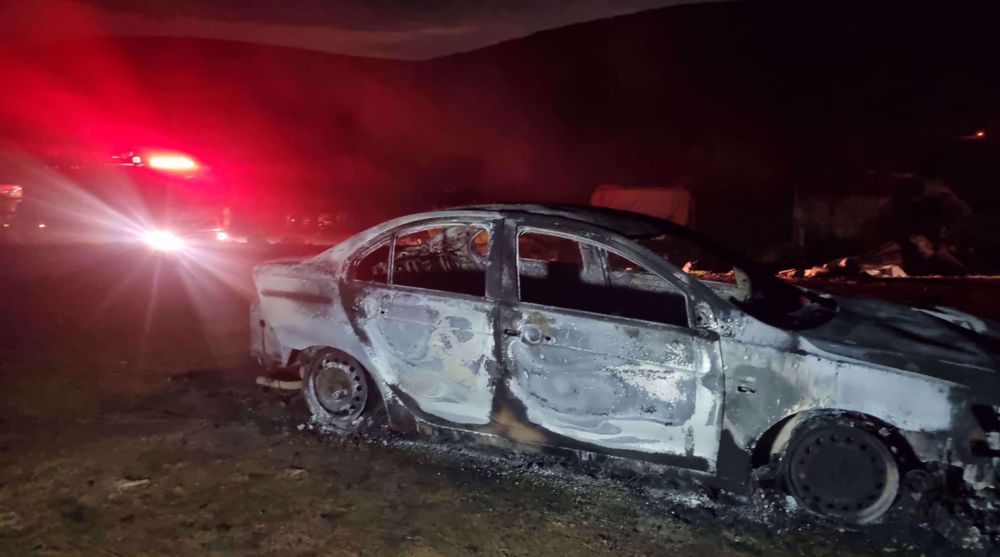 Aftermath of an Israeli settlers’ attack on the Bedouin community of Khallet al-Sidra, northeast of al-Quds, in the Israeli-occupied West Bank, on January 17, 2026.