
Genocide .live

Israeli settlers recently attacked the system of wells, pumps and pipelines of the Ein Samiyah spring in the West BanK
Original Social Media Post
"#WATCH: Israeli settlers recently attacked the system of wells, pumps and pipelines of the Ein Samiyah spring, a crucial lifeline for Palestinians in the West Bank https://arab.news/9tn8n" - Source
Archivist Notes On This Video
‘No life without water’: settler attacks threaten West Bank communities
In the West Bank village of Kafr Malik, Palestinian water operator Subhil Olayan monitors the vital Ein Samiyah spring, which supplies water to around 110,000 people. Recently, Israeli settlers attacked the system, damaging pipelines and temporarily cutting off water to nearby villages. Settlers, some armed, have also been seen using the spring's pools shortly after the sabotage.
This attack is part of a broader pattern of settler efforts to seize or sabotage Palestinian water sources, with support or indifference from Israeli authorities. Palestinians and experts say these actions are part of a strategy to push Palestinians off the land by depriving them of water—a tactic tied to growing calls for annexation of the West Bank.
Water scarcity, long a crisis in the region, is worsening. In Dura Al-Qaraa, a village reliant on Ein Samiyah as a backup source, agriculture has declined due to falling water levels, and drilling wells is banned under Israeli law. As droughts intensify and legal restrictions remain, Palestinians face deepening water insecurity.
According to B’Tselem, 2023 data shows that while nearly all Israeli settlers have daily running water, only 36% of West Bank Palestinians do. Residents fear the crisis is escalating year by year.
Event Notes
Settler attack on the Ein Samyah spring and communityThe Ein Samia spring in the West Bank, a vital water source for around 100,000 Palestinians across 33 villages, is under systematic attack by Israeli settlers. Settlers have vandalized infrastructure, smashed pumps and pipelines, stolen equipment, and restricted water access to Palestinians, transforming parts of the area into recreational spots for themselves. These assaults have forced the Jerusalem Water Authority to halt pumping operations to ensure water safety, exacerbating water scarcity for Palestinian communities.
Ein Samia is historically and culturally significant, with wells producing 12,000 cubic meters daily. Palestinians face severe inequalities in water access compared to settlers, whose consumption is six to eight times higher. Settler attacks, combined with Israeli-imposed road closures and military zones, have prevented timely repairs, deepening the water crisis.
Residents report rationing water for drinking and ablution, purchasing costly water tanks, and suffering psychological, physical, and economic hardships. Local authorities have subsidized water tanks to help vulnerable families, but attacks persist.
Experts describe this as a deliberate, state-supported campaign to control Palestinian land and water, framing it as a tool of displacement. Authorities and residents call for international protection, equitable distribution, and legislation to safeguard water security.
Ein Samia is not only a critical water source but also a symbol of Palestinian resilience, cultural heritage, and the struggle against systematic settler aggression and unequal resource control.
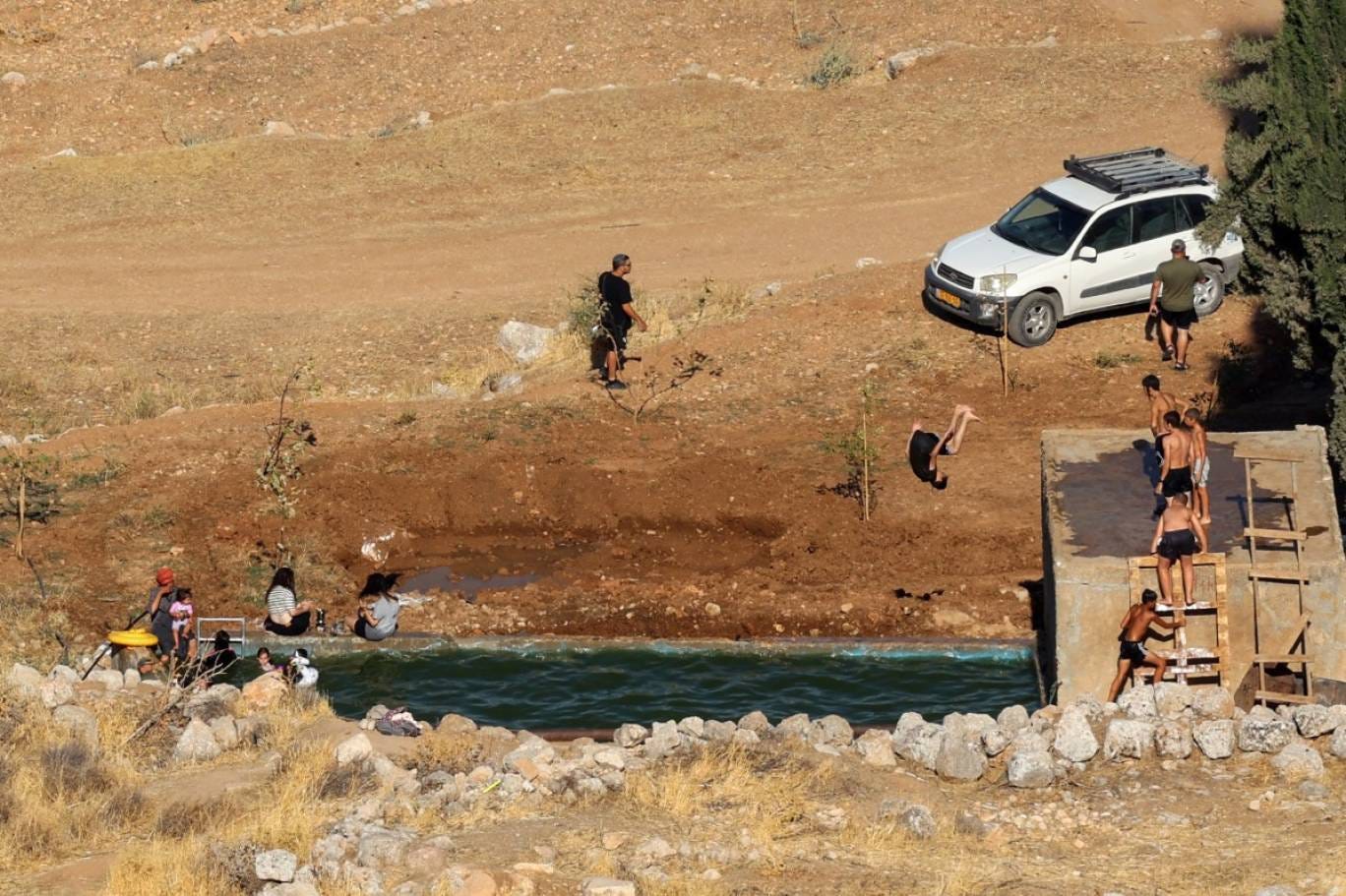 Israeli settlers swim in the Ein Samia spring near the village of Kafr Malik in the occupied West Bank (AFP).